


SBR制作の旅の記録/Chronicle of the Journey of Creation
時代考証は「正す」のではなく、フィクションを本物らしくする仕事
『スティール・ボール・ラン ジョジョの奇妙な冒険』(以下、『SBR』)スタッフによるリレーインタビューがスタート。第2回は、時代考証を担当した、大阪大学外国語学部非常勤講師の西川秀和さんにインタビューを実施。
前編では、アメリカ史やアメリカ大統領の研究を専門とする西川さんに、「時代考証とはどんな仕事なのか」「歴史研究者目線での見どころ」などについてうかがった。
――西川さんは、『SBR』にて時代考証を担当されています。まず、時代考証とはどのような仕事なのでしょうか?
西川:これはぜひ最初にお伝えしたいのですが、時代考証は原作にケチをつけたり、「これは間違っています」と正したりする仕事ではありません。『SBR』には魅力的な登場人物がたくさん登場します。その人物たちが「本当に1890年のアメリカにいた」と感じられたら、ファンとしてもうれしいはずですよね。その“本物らしさ”を出すための手伝いをするのが時代考証の役割です。
もちろん、あくまでもフィクションはフィクションです。ですが、その周囲にあるリアリティを大事にすることで、「これはフィクションだけれど、本当にありそうだ」と感じてもらうことができるんです。ストーリーや原作というフィクションを最大限魅力的にするために、フィクション以外の部分を徹底的に調べて、支える。それが時代考証の仕事だと私は考えています。
――西川さんはどのような経緯で本作に参加することになったのでしょうか?
西川:私の専門はアメリカ史で、特に建国期の18世紀末から19世紀のアメリカ大統領について研究しています。一方で、趣味でさまざまな言語の歴史書や古典を翻訳していて、アメリカ西部の無法者ビリー・ザ・キッドやアパッチ族の戦士ジェロニモ、そしてジャイロ・ツェペリのモデルとなったフランスの死刑執行人シャルル-=アンリ・サンソン(※)に関する書籍も扱ってきました。
そうしたことから、19世紀のアメリカについていろいろ調べたことをまとめてWEBで公開していたんです。それをデイヴィッドプロダクションの方がご覧になり、声をかけていただきました。どうやら木村(泰大)監督に、当時の空気感にこだわりたいという意向があったそうです。アメリカ史に加えて、趣味で調べてきた西部の歴史が、思いがけない形でつながりました。
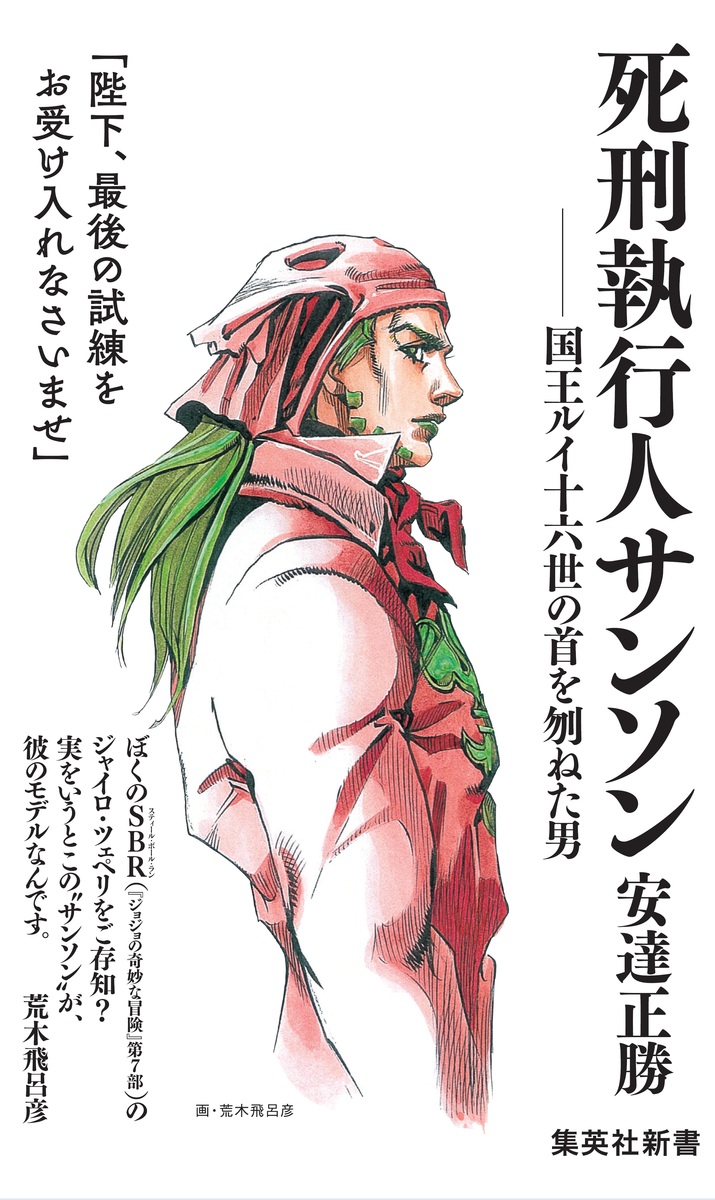
※『死刑執行人サンソン ―国王ルイ十六世の首を刎ねた男』(安達正勝著/集英社、2003年)の帯文に、荒木飛呂彦先生が「実をいうとこの“サンソン”が、彼(ジャイロ)のモデルなんです」とコメントを寄せている。表紙イラストは、荒木先生によるジャイロの描き下ろし。
――制作に参加して、最初に行ったことは?
西川:最初に、リサーチにかなり苦労されているとうかがったので、まず「19世紀のアメリカとは、そもそもどんな時代だったのか」を制作スタッフの皆さんにお話ししました。
具体的には、カウボーイが育てた牛がシカゴへ運ばれ、そこから東部へ大量の牛肉が流れていくような物資や人々の動きから、治安、街の様子、当時の技術などをまとめて説明しました。電信はどの程度使われていたのか、路面鉄道は何で動いていたのか、道路はどう舗装されていたのか……。まず制作側と1890年前後のアメリカに関する共通認識を作って、そこから原作の一つ一つの描写について考えていきました。
――『SBR』という作品について、歴史研究者の視点から特に面白いと感じたところはどこでしょうか?
西川:1890年という時代設定ですね。これが非常に面白いと思いました。1890年は「フロンティアの消滅」が宣言された年です。「西へ、西へ」と開拓してきたアメリカが、ついに国内のフロンティアを失い、「では、これからこの国はどこへ向かうのか」と考え始める転換点だったんです。
一方で、20世紀に入ると自動車や摩天楼など、現代につながるアメリカが姿を現してきます。つまり1890年は、西部開拓時代と現代的なアメリカとのちょうど間にある移行期なんです。西部劇というと、劇中よりももっと昔、開拓時代のど真ん中を扱うことが多いので、この時期を舞台にしている作品は意外と少ないんです。
――「1st STAGE」でも、馬だけでなく自動車が登場していました。
西川:そこがまさに面白いところです。1890年頃は、機械の力ではなく、人間と馬の力だけですごいことができるという感覚が、まだ成立していた最後の時代だったのではないかと思います。
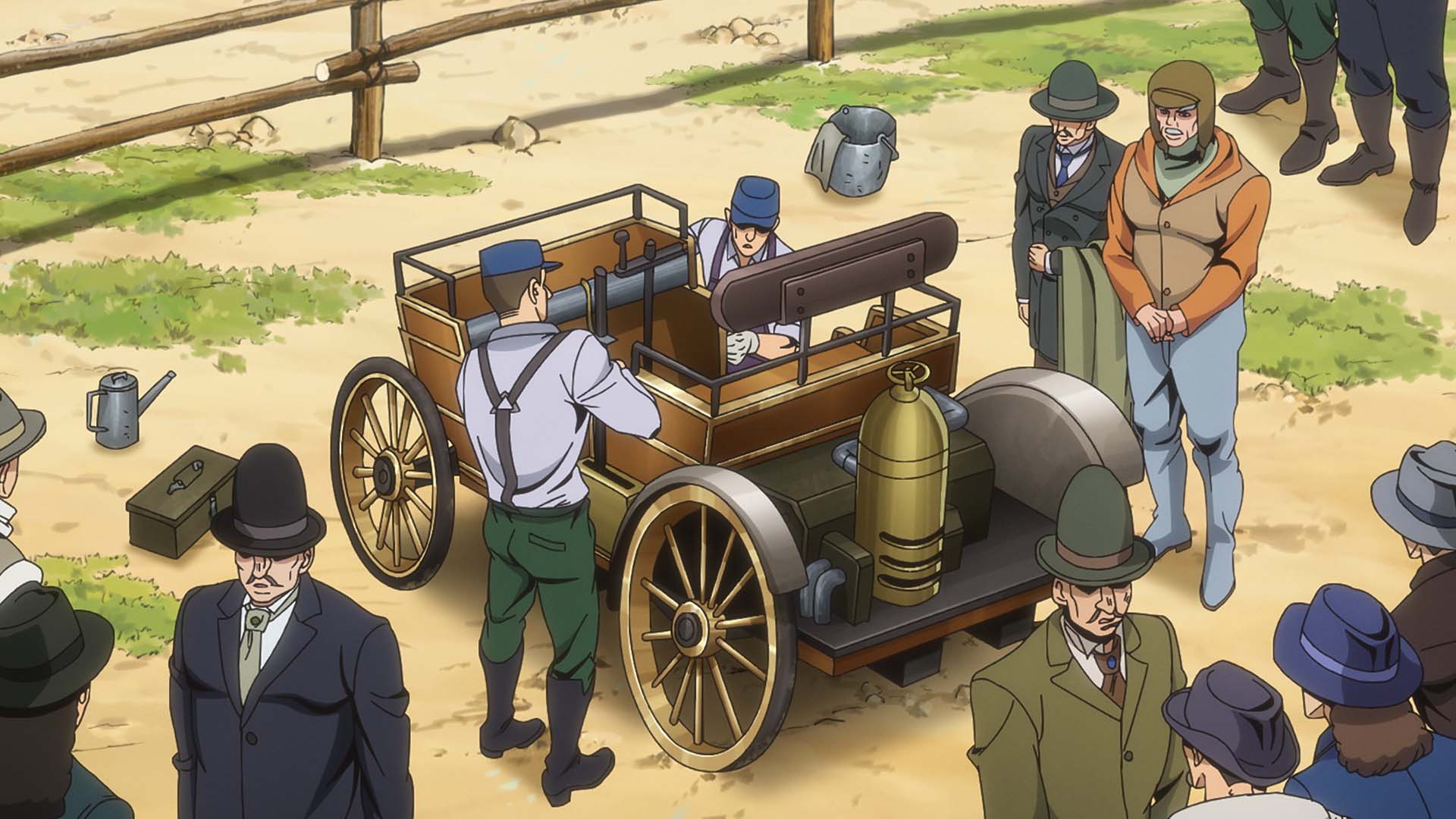
作中にも初期の自動車が登場しますが、すぐにレースから退場してしまいますよね。自動車が社会の主役になるには少し早い。都市では馬が路面鉄道電車を引く「馬車鉄道」がまだ走っていた時代です。それも1890年代頃から電気へと切り替わっていきますが。
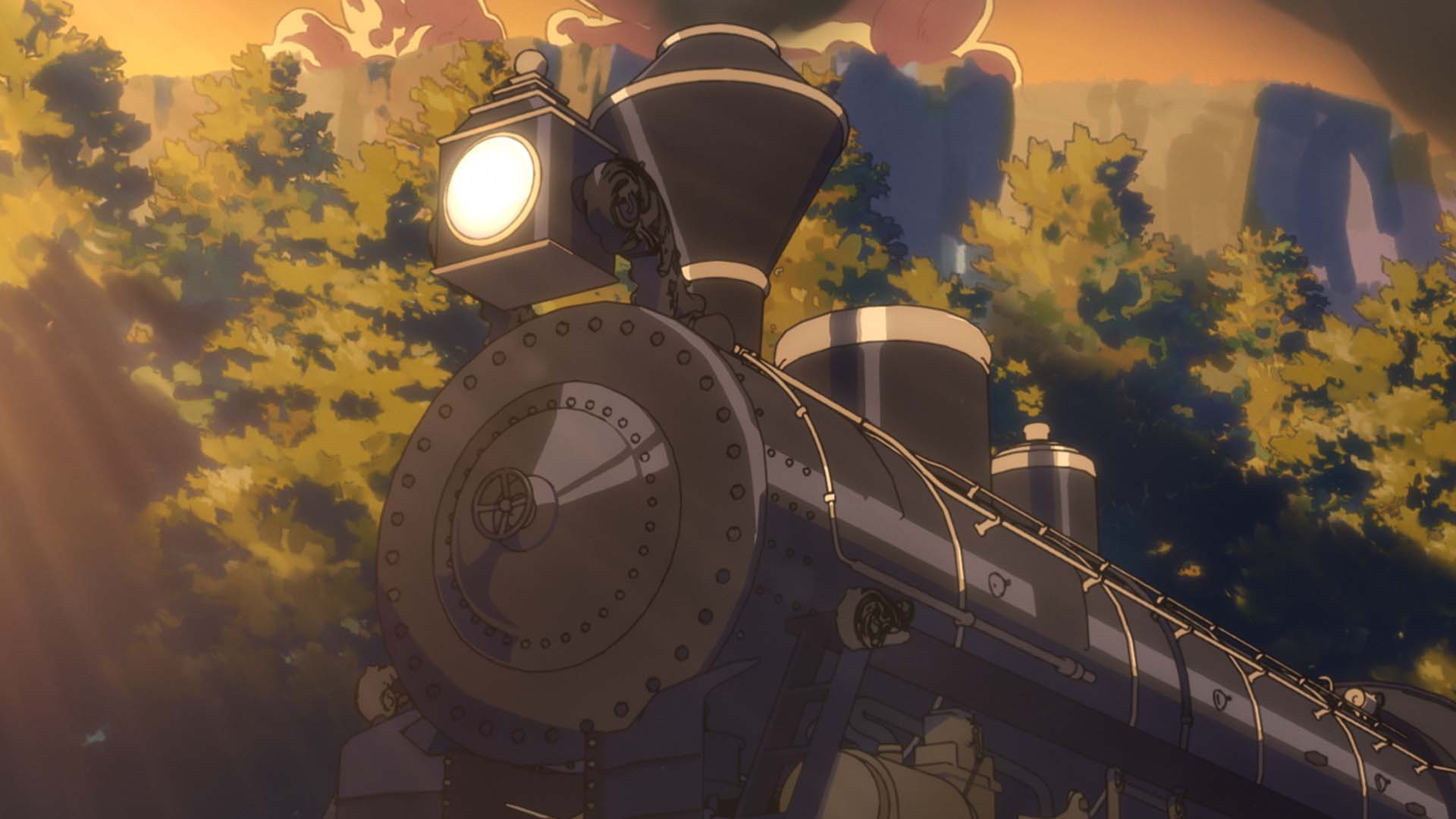
一方、鉄道はすでに全盛期です。アメリカでは1830年頃から鉄道が増え始め、19世紀半ばを過ぎると大陸横断鉄道も開通しています。東部と西部で密度の違いはありますが、すでに全米に鉄道網が広がった「鉄道王国」の時代なんです。
そして自動車より先に普及し始めていたのが自転車です。まだ高価ではありましたが、そういう新しいものが次々に登場しました。その時代に、人間と馬が北米大陸を横断するというのが『SBR』なんです。時代性と、登場人物たちが持つ「人間の力の可能性を追求する」という精神性が上手くマッチしているなと感じました。
――ジョニィ・ジョースターが使っている車椅子は、当時すでに一般的だったのでしょうか?
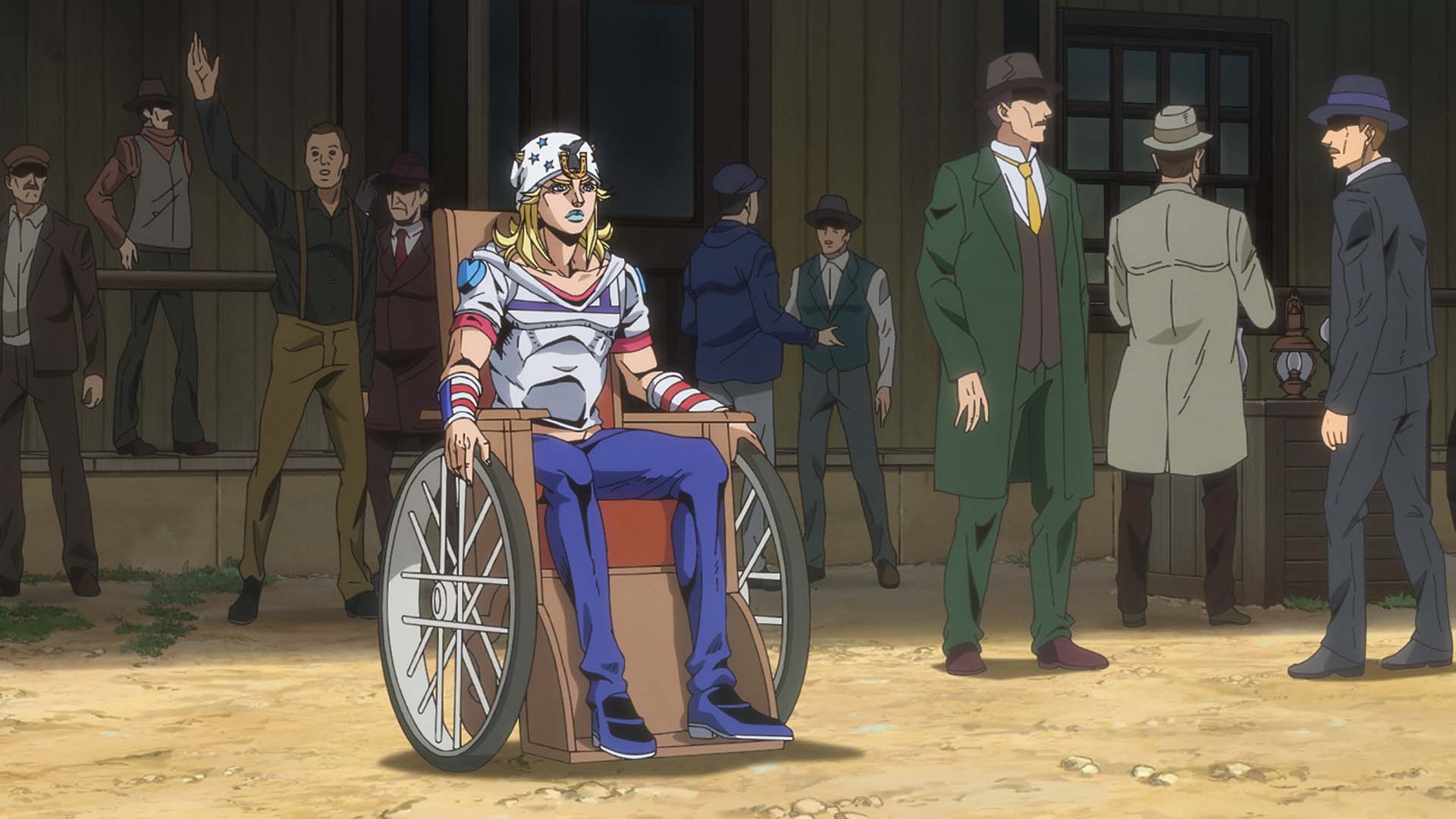
西川:車椅子自体はものすごく古くからあります。フランス革命の頃にはすでに使用例がありますし、19世紀には普通に使われていました。特にアメリカの南北戦争では手足が不自由になった方も多く出ていますから、1890年当時、車椅子そのものが極端に珍しいものだったわけではありません。
――時代考証の作業で、特に難しいのはどんなことでしょうか?
西川:原作とのすり合わせです。先ほども言ったように、我々の目的は原作を最大限に生かすことなので、「当時は存在しません。だからできません」で終わらせてはいけないんです。
たとえば、原作では輸血の描写が出てきます。ただ、当時はまだ現在のような輸血技術が確立されていません。そこで「原作ではこうなっているけれど、当時存在した技術の範囲で、どうすれば近いことができるだろう」と考えるんです。できる限り、その時代に成立する形を提示するわけです。
――「1st STAGE」でも、そうした工夫があったのでしょうか?
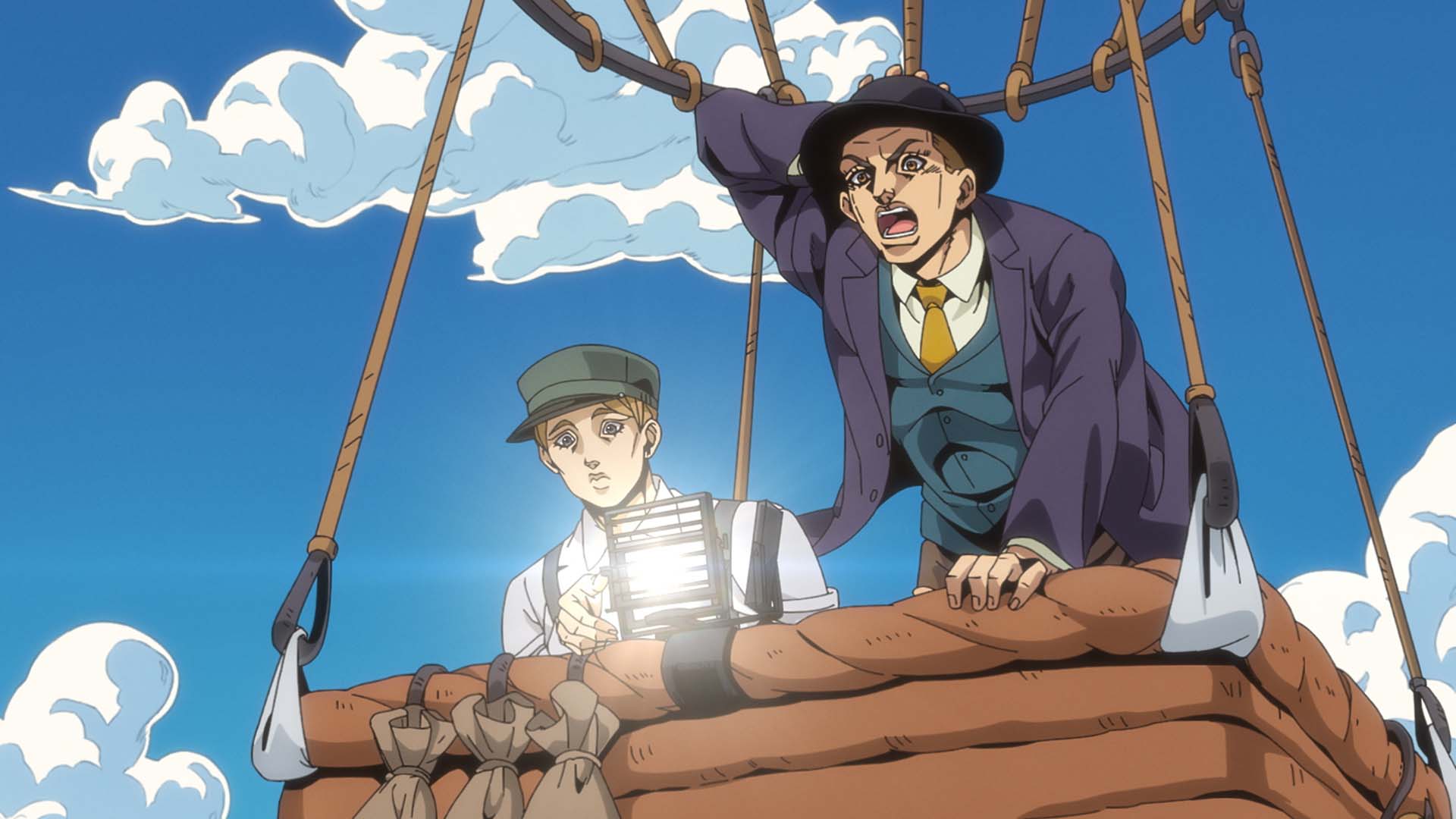
西川:わかりやすい例が、気球と列車の情報伝達です。気球から、レースを追う列車へ情報を伝える場面がありますよね。でも1890年ですから、ラジオもテレビもありませんし、無線を実用的に使うにはまだ早い。
では、どうするのか。そこで私が提案したのが「ヘリオグラフ」です。光の明滅によって情報を伝える、いわば光信号ですね。当時、気球からヘリオグラフを使った実例もあります。気球と列車で連絡を取り合った事例そのものではありませんが、当時の技術として成立する組み合わせではあるんですね。だから「無理です」と伝えるのではなく、「この技術ならできるのではないか」と提案する。そうやって原作の展開と時代をつなげていくんです。
もしかすると、「あれは何をしているんだ?」と思ったかもしれません(笑)。でも、それも面白いと思うんです。すべてを劇中で説明する必要はありませんし、「あれは何だったんだろう」「なんとなく連絡を取っているのかな」と興味を持っていただければいい。19世紀ならではの雰囲気として楽しんでもらえたらうれしいですね。
――そうした資料は、現在も豊富に残っているのでしょうか?
西川:とても全部は見られないくらい、膨大に残っています。19世紀後半になると写真資料が非常に多いですし、19世紀末なら初期の映像資料もあります。
たとえば、「当時のフィラデルフィアのマンホールは、どんな構造だったのか」と聞かれたとしても、水道局などの資料を調べればわかることがあります。都市については、保険会社が作成した非常に詳細な地図も残っています。文献、写真、実物、地図など、さまざまなものを組み合わせれば、かなり細かい部分まで追うことができます。
――それだけ資料があるということは、調査も比較的スムーズだったんですか?
西川:ところが、そうとも限らないんです。資料があることと、「知りたい答えがすぐ見つかる」ことは別なんです。実際にアニメ制作サイドから、「1890年頃は、街の中で馬をどうやってつないでいたのか」と聞かれたことがあります。でも、そんなテーマをわざわざまとめた先行研究はほとんどありません。「1890年の馬のつなぎ方」なんて検索して、そのまま答えが出てくるわけではないんです。
そういうときは、当時の写真をひたすら調査します。街に馬がいる写真を大量に見て、「ここにつないでいる」「こういう設備を使っている」という例を探すんです。写真だけでなく絵画や新聞、雑誌の挿絵も見ます。最後は自分の目で資料を大量に確認するしかないんです。
Period research is not about “correcting” the story. It’s about making fiction feel authentic.
An interview series with the staff of STEEL BALL RUN JoJo’s Bizarre Adventure (hereafter SBR) has become its second volume. This time, we interviewed Hidekazu Nishikawa, Adjunct Lecturer, School of Foreign Studies, Osaka University, who oversees period research of SBR.
In this first half, we spoke with Nishikawa-san, whose specialty is the study of American history and U.S. presidents, about topics such as “what period research entails” and “points of interest from a historian’s perspective.”
—Nishikawa-san, you are in charge of period research for SBR. To begin with, what kind of work is period research?
Nishikawa: This is something I would very much like to say at the outset: period research is not a job that involves finding fault with the original work or correcting it by saying, “This is wrong.” SBR features many fascinating characters. If those characters feel as though they “really existed in America in 1890,” that should be exciting for fans as well. The role of period research is to help bring out that sense of authenticity.
Of course, fiction is ultimately fiction. But by valuing the reality that surrounds it, we can make people feel, “This may be fiction, but it seems like it could really have happened.” In order to make the fiction—the story and the original work—as compelling as possible, we thoroughly research and support the parts outside the fiction. That is what I consider the work of period research to be.
—How did you come to be involved in this work?
Nishikawa: My specialty is American history, and I research U.S. presidents from the late 18th century, around the time of the nation’s founding, through the 19th century. At the same time, as a hobby I translate historical books and classics in various languages, and I have also worked on books related to the American West outlaw Billy the Kid, the Apache warrior Geronimo, and Charles-Henri Sanson (*), the French executioner who served as the model for Gyro Zeppeli.
For those reasons, I had compiled and published on the web various things I had researched about 19th-century America. Someone from david production saw it and reached out to me. Apparently, Mr. Yasuhiro Kimura, the director of SBR, wanted to pay close attention to the atmosphere of the era. In addition to American history, the history of the West that I had researched as a hobby ended up connecting with the project in an unexpected way.
* In the obi copy for The Executioner Sanson: The Man Who Beheaded King Louis XVI (written by Masakatsu Adachi / Shueisha, 2003), Hirohiko Araki commented, “To tell the truth, this ‘Sanson’ is the model for him (Gyro).” The cover illustration is an original drawing of Gyro by Araki.
—What was the first thing you did after joining production?
Nishikawa: First, I was told that the team was having considerable difficulty with the research, so I began by speaking to the production staff about what kind of era 19th-century America actually was.
Specifically, I gave an overview that covered the movement of goods and people—such as cattle raised by cowboys being transported to Chicago and then large quantities of beef flowing from there to the East—as well as public safety, the state of towns, and the technology of the time. To what extent was the telegraph in use? What powered streetcars? How were roads paved? We first built a shared understanding with the production side of America around 1890, and from there we considered each individual depiction in the original work.
—From the perspective of a historian, what did you find especially interesting about SBR as a work?
Nishikawa: The setting of the year 1890. I found that extremely interesting. 1890 was the year when the “closing of the frontier” was declared. America, which had continued to expand “westward, westward,” had finally lost its domestic frontier and began to ask, “Where does this country go from here?” It was a turning point.
At the same time, once the 20th century began, automobiles, skyscrapers, and other elements of America that connect to the modern day started to emerge. In other words, 1890 was a transitional period situated exactly between the age of westward expansion and modern America. When people think of Westerns, they often deal with an earlier period—right in the middle of the pioneer era—so works set in this particular era are surprisingly rare.
—In 1st STAGE, not only horses but also automobiles appeared.
Nishikawa: That is precisely what makes it interesting. Around 1890, I think it may have been the last era in which people could still believe that incredible feats could be achieved not by mechanical power, but solely through the strength of humans and horses.
Early automobiles appear in the story, but they quickly drop out of the race, don’t they? It was still a little too early for automobiles to become the main players in society. In cities, horse-drawn streetcars, in which horses pulled streetcars, were still running. Those too began shifting to electricity around the 1890s, however.
Railroads, on the other hand, were already at their peak. In America, railroads began increasing around 1830, and after the mid-19th century, the transcontinental railroad was also completed. Although there were differences in density between the East and the West, it was already an era of a “railroad kingdom,” with a rail network spread across the entire country.
And bicycles began to spread before automobiles did. They were still expensive, but new things like that were appearing one after another. It is in that era that SBR depicts humans and horses crossing the North American continent. I felt that the character of the era and the spirit held by the characters—the pursuit of the possibilities of human strength—matched very well.
—Was the wheelchair used by Johnny Joestar already common at the time?
Nishikawa: Wheelchairs have existed for an extremely long time. There are already examples of their use around the time of the French Revolution, and they were commonly used in the 19th century. In particular, the American Civil War resulted in many people with impaired limbs, so in 1890, the wheelchair itself was not something exceptionally rare.
—What is especially difficult about the work of period research?
Nishikawa: Aligning it with the original work. As I said earlier, our purpose is to make the most of the original work, so we cannot simply end the discussion by saying, “That did not exist at the time, so it cannot be done.”
For example, the original work includes a depiction of blood transfusion. However, at that time, transfusion technology, as we know today, had not yet been established. So we think, “This is how it is portrayed in the original work, but within the range of technologies that existed at the time, how could something close to it be achieved?” We present a form that can hold up within that era as much as possible.
—Were there such creative solutions in the 1st STAGE as well?
Nishikawa: An easy-to-understand example is the communication of information between the balloon and the train. There is a scene where information is relayed from the balloon to the train following the race, isn’t there? But since it is 1890, there is no radio or television, and it is still too early for wireless communication to be used practically.
So what could be done? What I proposed was a “heliograph.” It is a kind of optical signal that conveys information through flashes of light. At the time, there were actual examples of heliographs being used from balloons. It was not an example of direct communication between a balloon and a train, but as a combination of technologies from that era, it was feasible. So instead of saying, “That is impossible,” we propose, “Perhaps this technology would make it possible.” In that way, we connect the developments of the original work with the period.
Some viewers may perhaps have wondered, “What are they doing there?” (laughs). But I think that is interesting too. There is no need to explain everything within the story, and it is enough if people become curious and think, “What was that?” or “Maybe they are somehow communicating.” I would be happy if viewers enjoyed it as part of the atmosphere unique to the 19th century.
—Do a wealth of such materials still remain today?
Nishikawa: There is an enormous amount remaining—so much that it would be impossible to see it all. From the latter half of the 19th century onward, there are many photographic materials, and by the end of the 19th century, there are even early motion-picture materials.
For example, even if someone asked, “What structure did manholes in Philadelphia have at the time?” There are cases where we can find out by looking into materials from the water department and similar sources. For cities, very detailed maps created by insurance companies also remain. By combining various materials—documents, photographs, actual objects, maps, and more—we can trace things down to quite fine details.
—With that much material available, was the research relatively smooth?
Nishikawa: Not necessarily. The fact that materials exist and the fact that “the answer you want can be found immediately” are two different things. In fact, the anime production side once asked me, “Around 1890, how did people tie up horses in town?” But there is almost no prior research that specifically compiles such a topic. Searching for how horses were tied up in 1890 is not going to produce the answer as-is.
In such cases, we investigate photographs from the time one by one. We look through large numbers of photographs showing horses in towns and search for examples such as being tied up here, or this kind of equipment is being used. We also look at not only photographs, but paintings, newspapers, and magazine illustrations. In the end, the only option is to check a large volume of materials with our own eyes.
(Continued to the second half)